300 Cute Mermaid Coloring Pages - KDP
If you’ve ever scrolled through Amazon’s Kindle Direct Publishing catalog and paused at a coloring book with 500+ reviews, vibrant cover art, and consistent “great for kids!” feedback—you’ve seen the quiet power of well-executed, high-quality digital assets. 300 Cute Mermaid Coloring Pages - KDP isn’t just another bundle of clipart. It’s a production-ready toolkit built for creators who value time, scalability, and real-world usability—whether you’re launching your first KDP coloring book or scaling a portfolio of 20+ titles.
What It Is—and What It Isn’t
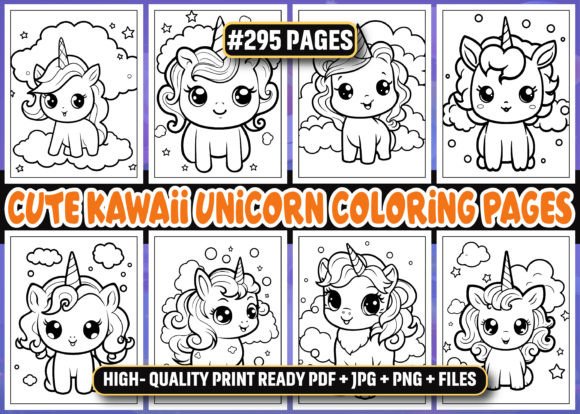
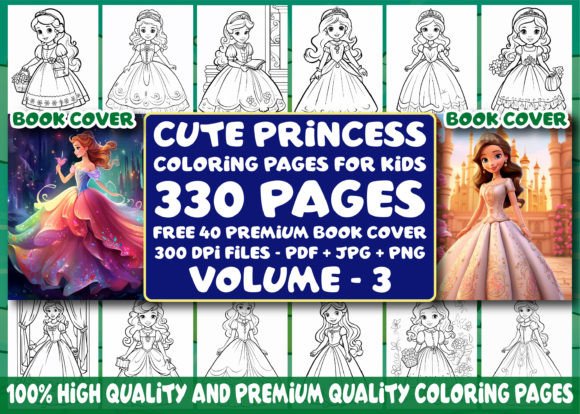
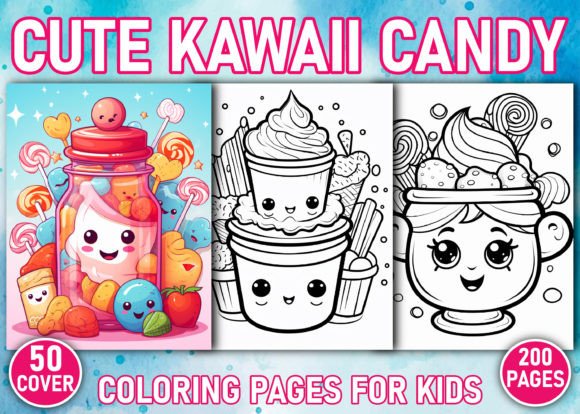
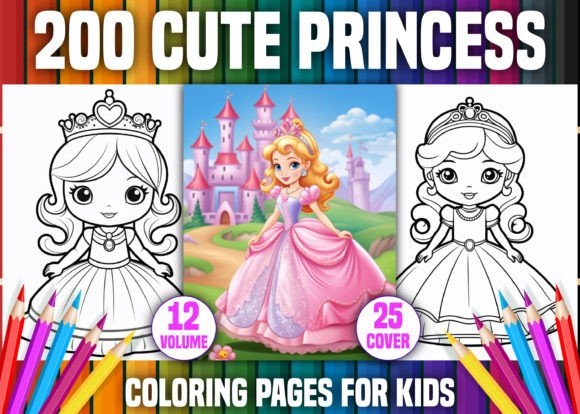
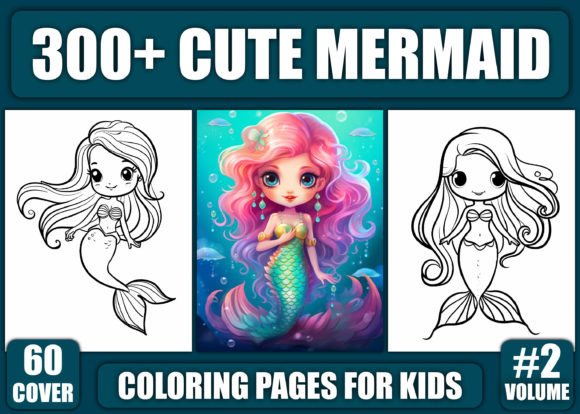
This isn’t a single PDF coloring book you download and resell as-is. It’s a flexible, modular asset pack: 300 original mermaid-themed line drawings, delivered in both JPG and PNG (with transparent backgrounds), plus a ready-to-print PDF version—all at 300 dpi resolution. Each illustration is black-and-white, hand-crafted for clarity and age-appropriate detail (think gentle curves, expressive eyes, friendly sea creatures—not overly intricate mandalas or adult-only themes). You also get 60 distinct cover designs, sized to Amazon’s KDP specifications (8.5" x 11"), so you’re never scrambling for a professional-looking front page.
Where and When This Makes Real Sense
Consider Maya, a freelance graphic designer who spends weekends helping small publishers prep interiors. Last month, she used 300 Cute Mermaid Coloring Pages - KDP to build three separate coloring books for different clients—one themed around “Mermaid Friends,” another titled “Ocean Wishes,” and a third branded for a local aquarium’s summer camp. Because each page is standalone and high-res, she dropped them into Canva, adjusted spacing and margins per KDP guidelines, added simple title pages, and exported print-ready PDFs—all in under six hours.
Then there’s Derek, a homeschool dad in Ohio who prints two copies weekly—one for his 7-year-old daughter and one for her best friend’s birthday party. He doesn’t need Amazon listings; he needs clean, engaging pages that hold attention during rainy afternoons. He downloads the ZIP, opens the PDF on his home printer, and selects “fit to page” — no cropping, no blurry edges, no guesswork. The fact that every image is 300 dpi means even his older inkjet produces crisp lines, not smudged outlines.
And across town, a teacher named Lena uses select pages from the bundle in her 2nd-grade art rotation. She projects a few mermaid scenes onto her smartboard, then hands out printed versions for students to color while discussing ocean habitats. Because the illustrations are cheerful but not overwhelming—no tiny seashell patterns inside starfish—kids stay focused. She also saves the PNG files to her school Google Drive, letting students open them in free drawing apps on classroom tablets.
How Different Users Actually Benefit
- Entrepreneurs building a KDP business: You can create at least five distinct interior layouts—mixing full-page mermaids, half-page scenes with speech bubbles (“Hi! I’m Coral!”), border frames, and activity prompts (“Draw your own seashell crown!”). That variety helps avoid Amazon’s duplicate content filters and gives each book its own voice.
- Educators and therapists: These pages support fine motor development, emotional expression, and thematic learning units (marine biology, storytelling, empathy-building). The absence of grayscale shading or complex textures makes them accessible for children with visual processing sensitivities or younger learners.
- Content creators and bloggers: Use individual PNGs as custom Pinterest pins, Instagram story backgrounds, or printable classroom rewards (“Color this mermaid to earn your Sea Explorer Badge!”). No attribution required—you own usage rights for commercial and personal projects.
- Hobbyists and gift-makers: Print a dozen favorites, bind them with ribbon and a shell-shaped charm, and give them as personalized birthday gifts. The consistent 8.5" x 11" size means they fit standard scrapbook sleeves or mini clipboards without trimming.
Practical Things to Consider Before You Jump In
First—check your workflow. If you rely heavily on Adobe InDesign or Affinity Publisher, the JPG/PNG files integrate smoothly. If you only use Word or Google Docs, you’ll want to test how images scale and wrap text (hint: insert them as “in line with text” and adjust sizing manually for best results). Also, while all 300 pages are original and royalty-free, they’re intended for end-use—not resale as raw assets. So don’t upload the ZIP file directly to Creative Market or bundle it into a “coloring page subscription.”
Second—think about audience fit. These are “cute” mermaids: smiling, approachable, inclusive in design (varied hair textures, skin tones, accessories like wheelchairs or hearing aids on select pages). They’re not edgy, gothic, or hyper-realistic—so if your brand leans into dark fantasy or advanced anatomy, this isn’t the match. But if your readers are ages 4–10, love sparkles and friendship themes, and respond well to warmth over intensity, you’ll see engagement lift.
Third—plan your covers wisely. You get 60 options, but they’re not interchangeable across all niches. Some feature bold fonts ideal for Amazon thumbnails; others are softer and better suited for Etsy listings or school newsletters. Save a few variants before finalizing—test one with a bright coral background, another with deep navy, and compare readability on mobile screens.
Why “Volume -2” Matters More Than It Sounds
The “-2” signals consistency—not repetition. Volume -1 laid groundwork with classic mermaid poses and coral reef backdrops. Volume -2 expands intentionally: more diverse character interactions (mermaids gardening kelp, reading maps with octopuses, hosting underwater tea parties), more subtle educational cues (a labeled jellyfish anatomy page, a “count the seahorses” scene), and refined linework that holds up even when shrunk to thumbnail size. It’s the difference between having a solid foundation and having room to grow—without reinventing the wheel each time you launch.
Bottom line? 300 Cute Mermaid Coloring Pages - KDP works because it respects your time, your audience, and your goals. It doesn’t ask you to become an illustrator. It doesn’t require expensive software or technical certifications. It gives you clean, tested, emotionally resonant assets—and lets you focus on what matters most: creating something meaningful, selling it confidently, or simply watching a child’s face light up as they add glitter glue to a mermaid’s tail.